At Tots To Teens & In Bee-Tween, our pediatric dentists Dr. B and Dr. Lin are dedicated to the oral health of children from infancy through the teen years. They have the experience and qualifications to care for a child’s teeth, gums and mouth throughout the various stages of childhood through the teenage years.
Children begin to get their baby teeth during the first 6 months of life. By age 6 or 7 years, they start to lose their first set of teeth, which eventually are replaced by secondary, permanent teeth. Without proper dental care, children face possible oral decay and disease that can cause a lifetime of pain and complications. Today, early childhood dental caries—an infectious disease—is 5 times more common in children than asthma and 7 times more common than hay fever. We are dedicated to keeping your children cavity-free!
A toothbrush will remove plaque bacteria that can lead to decay. Any soft-bristled toothbrush with a small head, preferably one designed specifically for infants, should be used at least once a day at bedtime.
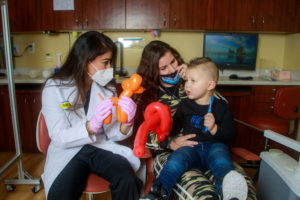
In order to prevent dental problems, your child should see a pediatric dentist when the first tooth appears, or no later than his/her first birthday.
Pediatric dentists, like Dr. B and Dr. Lin, are the pediatricians of dentistry. A pediatric dentist has two to three years of specialty training following dental school and limits his/her practice to treating children only. Dr. B and Dr. Lin are your primary and specialty oral care providers for infants and children from Tots To Teens & in-between and that includes those with special health needs.
Dr. B and Dr. Lin provide comprehensive oral health care that includes the following:
Primary, or “baby,” teeth are important for many reasons. Not only do they help children speak clearly and chew naturally, but they also aid in forming a path those permanent teeth can follow when they are ready to erupt.
First, rinse the irritated area with warm salt water and place a cold compress on the face if it is swollen. Give the child acetaminophen for any pain, rather than placing aspirin on the teeth or gums. Finally, call our office for an appointment with Dr. B or Dr. Lin as soon as possible.
Thumb and pacifier sucking habits will generally only become a problem if they go on for a very long period of time.
Most children stop these habits on their own, but if they are still sucking their thumbs or fingers past the age of three, a mouth appliance may be recommended by our doctors.
Avoid nursing children to sleep or putting anything other than water in their bed-time bottle. Also, learn the proper way to brush and floss your child’s teeth. Take your child to Tots To Teens regularly to have his/her teeth and gums checked. The first dental visit should be scheduled by your child’s first birthday.
A check-up every six months is recommended in order prevent cavities and other dental problems. However, our doctors will tell you when and how often your child should visit based on their personal oral health.
The sooner the better! Starting at birth, clean your child’s gums with a soft infant toothbrush or cloth and water. As soon as the teeth begin to appear, start brushing twice daily using fluoridated toothpaste and a soft, age-appropriate sized toothbrush. Use a “smear” of toothpaste to brush the teeth of a child less than 2 years of age.
For the 2-5-year-old, dispense a “pea-size” amount of toothpaste and perform or assist your child’s toothbrushing.
Remember that young children do not have the ability to brush their teeth effectively. Children should spit out and not swallow excess toothpaste after brushing.
Make sure your child has a balanced diet, including one serving each of: fruits and vegetables, breads and cereals, milk and dairy products, and meat, fish and eggs. Limiting the servings of sugars and starches will aid in protecting your child’s teeth from decay. You can also ask our doctors to help you select foods that protect your children’s teeth.
Sealants work by filling in the crevices on the chewing surfaces of the teeth. This shuts out food particles that could get caught in the teeth, causing cavities. The application is fast and comfortable and can effectively protect teeth for many years.
Have Dr. B or Dr. Lin evaluate the fluoride level of your child’s primary source of drinking water. If your child is not getting enough fluoride internally through water (especially if the fluoride level is deficient or if your child drinks bottled water without fluoride), then Dr. B or Dr. Lin may prescribe fluoride supplements.
Soft plastic mouthguards can be used to protect a child’s teeth, lips, cheeks and gums from sport related injuries. A custom-fitted mouthguard developed by our dentists will protect your child from injuries to the teeth, face and even provide protection from severe injuries to the head.
The most important thing to do is to remain calm. Then find the tooth. Hold it by the crown rather than the root and try to reinsert it in the socket. If that is not possible, put the tooth in a glass of milk and take your child and the glass immediately to the pediatric dentist.
This is a common problem with children. It occurs when a new permanent tooth erupts, but the baby tooth has not yet fallen out. Usually the new tooth dissolves the root of the baby tooth and it falls out. If, however, the permanent tooth comes in a little off center, and does not dissolve the baby tooth’s root completely, the child may have both present. The child may wiggle the baby tooth out. If after a few weeks they are both still present – contact Dr. B or Dr. Lin for an appointment to have the baby tooth removed.
There is very little risk in dental X-rays. Dr. B and Dr. Lin are especially careful to limit the amount of radiation to which children are exposed. Lead aprons and high-speed film are used to ensure safety and minimize the amount of radiation.
Our doctors utilize Pediatric Sedation to reduce the child’s anxiety and discomfort during their dental visits. In some cases, the child may become drowsy or less active while sedated, but this will quickly desist after the procedure is completed. Sedation helps children relax, cope, and feel happier about treatment. Conscious sedation allows children to continually communicate, follow instructions, and cooperate during the entire procedure.
Our doctors may use nitrous oxide (more commonly known as “laughing gas”) for children who exhibit particular signs of nervousness or anxiety.
Parents should take their children to Tots To Teens regularly, beginning with the eruption of the first tooth. Then, our dentists can recommend a specific program of brushing, flossing, and other treatments for parents to supervise and teach to their children. These home treatments, when added to regular dental visits and a balanced diet, will help give your child a lifetime of healthy habits.
Children under age seven have a tendency to grind their teeth. We call it bruxism. This is before their permanent first molars and permanent incisors come in. It is not usually a problem. If the grinding does persist through ages eight to ten, contact our doctors. If not treated, it can cause future bite problems and eventually wear down the child’s permanent teeth.
Often when a child complains of mouth pain it may be from dental problems such as canker sores, teeth eruption, tooth decay, gum inflammation, or a dental abscess. We recommend coming into our office to have the doctors diagnose the problem. The pain also may be from medical issues such as earaches or sinus problems.
Children are not just small adults. They are not always able to be patient and cooperative during a dental exam.
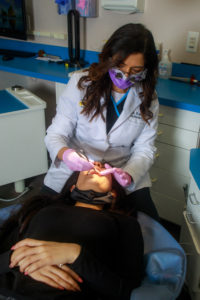
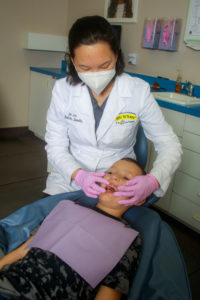
Our pediatric dentists know how to examine and treat children in ways that make them comfortable. In addition, at our Tots To Teens’ office, we use specially designed equipment that is arranged and decorated with your children in mind.
Dr. B and Dr. Lin offer a wide range of treatment options, as well as expertise and training to care for your child’s teeth, gums and mouth. When your pediatrician suggests that your child receive a dental exam, you can be assured that our team at Tots To Teens & In-Bee-Tween will provide the best possible care.
Our doctors at Tots To Teens & In-Bee-Tween are dedicated to meeting your pediatric and orthodontic dental needs.
Pediatric Dentistry
Orthodontics
Our doctors are dedicated to meeting your pediatric and orthodontic dental needs. We want our Tot and Teen patients to achieve optimal oral health, and that is why we utilize the latest techniques and equipment with every procedure. We offer a warm, comfortable, welcoming office setting.